
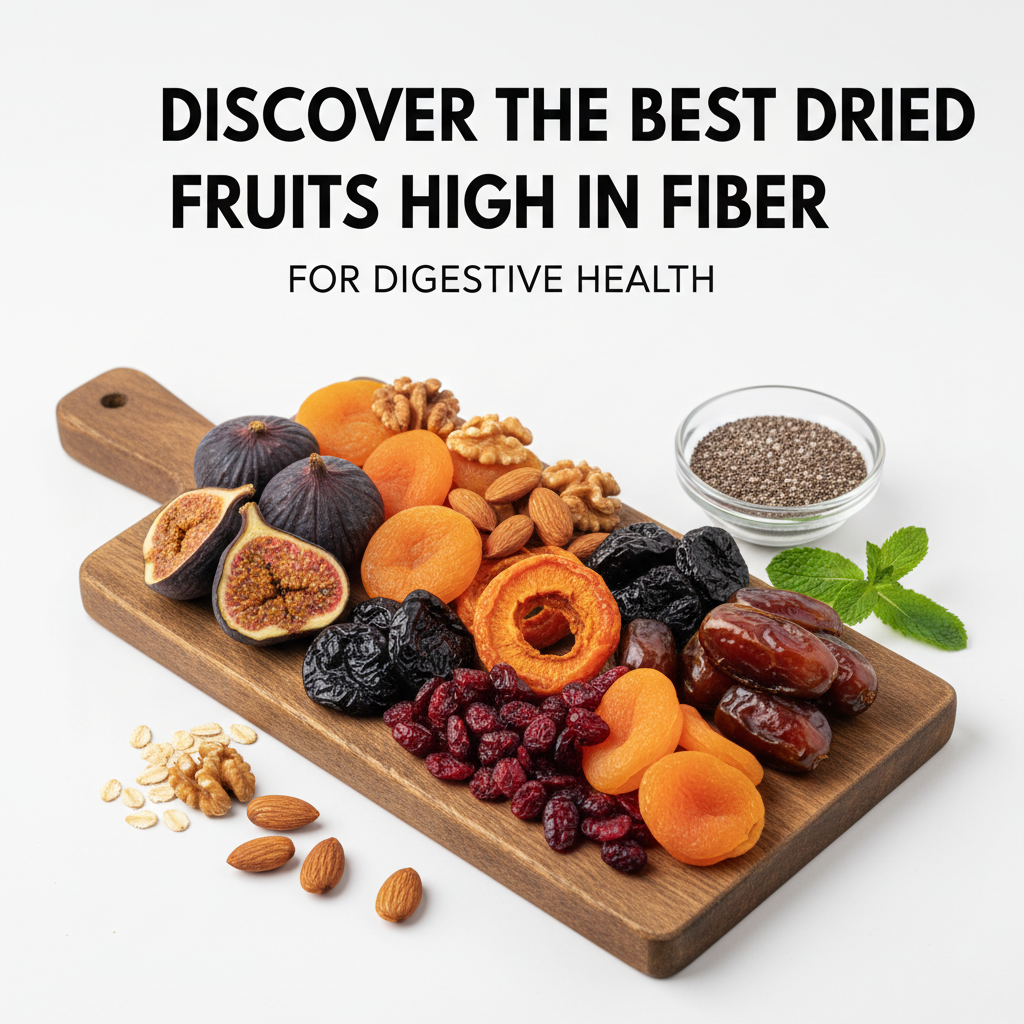
# Top Dried Fruits High in Fiber: Boost Your Digestive Health Naturally
Incorporating dried fruits into your diet is an effective and delicious way to increase your fiber intake, which is essential for maintaining digestive health and overall well-being. This article explores the top dried fruits rich in fiber, their health benefits, and practical tips for including them in your daily meals.
## Understanding Dietary Fiber and Its Importance
### What Is Dietary Fiber?
Dietary fiber is a type of carbohydrate found in plant-based foods that the body cannot digest. It passes relatively intact through the stomach, small intestine, and colon, aiding in digestion and promoting overall health. There are two main types of dietary fiber:
– **Soluble Fiber**: Dissolves in water to form a gel-like substance. It helps lower blood cholesterol and glucose levels. Sources include oats, peas, beans, apples, and citrus fruits. ([mayoclinic.org](https://www.mayoclinic.org/fiber/art-20043983?utm_source=openai))
– **Insoluble Fiber**: Does not dissolve in water and adds bulk to stool, aiding in digestion and preventing constipation. Sources include whole grains, nuts, and vegetables like cauliflower and green beans. ([mayoclinic.org](https://www.mayoclinic.org/fiber/art-20043983?utm_source=openai))
Most high-fiber plant foods contain both types of fiber, contributing to various health benefits.
### Recommended Daily Fiber Intake
The National Academy of Medicine recommends the following daily fiber intake for adults:
– **Women under 50**: 25 grams
– **Men under 50**: 38 grams
– **Women 50 and older**: 21 grams
– **Men 50 and older**: 30 grams
However, studies indicate that most adults consume significantly less fiber than recommended, averaging about 15 grams per day. ([nutrition.org](https://nutrition.org/most-americans-are-not-getting-enough-fiber-in-our-diets/?utm_source=openai))
## Top Dried Fruits High in Fiber
### Dried Figs
– **Fiber Content**: A 1/4 cup (about 4 figs) provides approximately 3 grams of fiber.
– **Additional Nutrients and Health Benefits**: Dried figs are rich in potassium, calcium, and iron. They support bone health and may aid in regulating blood pressure.
– **Incorporation Ideas**: Enjoy them as a snack, add to salads for a sweet touch, or incorporate into baked goods like muffins and bread.
### Prunes (Dried Plums)
– **Fiber Content**: A 1/4 cup (about 4 prunes) contains around 3 grams of fiber.
– **Digestive Health Benefits**: Prunes are well-known for their natural laxative effect, helping to prevent constipation and promote regular bowel movements. ([healthline.com](https://www.healthline.com/nutrition/dried-fruit-good-or-bad?utm_source=openai))
– **Usage Suggestions**: Blend into smoothies, sprinkle over cereals, or use in baking to add moisture and sweetness.
### Dried Apricots
– **Fiber Content**: A 1/4 cup (about 4 apricots) provides approximately 2 grams of fiber.
– **Rich in Vitamins and Antioxidants**: Dried apricots are high in vitamins A and C, supporting eye health and immune function.
– **Serving Ideas**: Add to trail mixes, use as a topping for yogurt, or include in baked goods like cookies and cakes.
### Dried Apples
– **Fiber Content**: A 1/4 cup (about 4 slices) contains around 2 grams of fiber.
– **Health Benefits Beyond Fiber**: Dried apples are a good source of vitamin C and antioxidants, which help combat oxidative stress.
– **How to Enjoy**: Eat as a snack, mix into oatmeal, or incorporate into baked goods like muffins and pancakes.
### Raisins
– **Fiber Content**: A 1/4 cup (about 40 raisins) provides approximately 1 gram of fiber.
– **Additional Nutrients and Health Benefits**: Raisins are rich in iron and potassium, supporting blood health and muscle function.
– **Incorporation Tips**: Add to cereals, salads, or baked items like bread and cookies for added sweetness and texture.
## Health Benefits of Consuming High-Fiber Dried Fruits
### Digestive Health
Fiber plays a crucial role in promoting regular bowel movements, preventing constipation, and supporting overall gut health. Incorporating high-fiber dried fruits into your diet can aid in maintaining a healthy digestive system. ([mayoclinic.org](https://www.mayoclinic.org/fiber/art-20043983?utm_source=openai))
### Weight Management
High-fiber foods, including dried fruits, help you feel full longer, reducing overall calorie intake and assisting in weight management. This satiety effect can be beneficial for those looking to maintain or lose weight. ([health.harvard.edu](https://www.health.harvard.edu/nutrition/the-facts-on-fiber?utm_source=openai))
### Blood Sugar Control
Fiber helps regulate blood sugar levels by slowing digestion and absorption, which is particularly beneficial for individuals with diabetes. Including high-fiber dried fruits in your diet can aid in blood sugar management. ([mayoclinic.org](https://www.mayoclinic.org/fiber/art-20043983?utm_source=openai))
### Heart Health
A diet rich in fiber has been linked to lower cholesterol levels and a reduced risk of cardiovascular diseases. Consuming high-fiber dried fruits can contribute to heart health by providing essential nutrients and promoting healthy cholesterol levels. ([health.harvard.edu](https://www.health.harvard.edu/nutrition/the-facts-on-fiber?utm_source=openai))
## Tips for Incorporating Dried Fruits into Your Diet
### Portion Control
While dried fruits are nutrient-dense, they are also calorie-dense. To avoid excessive calorie intake, be mindful of portion sizes. A small handful (about 1/4 cup) is typically sufficient to reap the benefits without overconsuming calories.
### Creative Recipe Ideas
– **Smoothies**: Blend dried fruits like prunes and apricots with yogurt and fresh fruits for a fiber-rich drink.
– **Salads**: Add chopped dried figs or raisins to salads for a sweet contrast to savory ingredients.
– **Baked Goods**: Incorporate dried fruits into muffins, bread, and cookies to enhance flavor and nutritional value.
– **Trail Mixes**: Combine dried fruits with nuts and seeds for a convenient, on-the-go snack.
### Choosing Quality Dried Fruits
– **Opt for Unsweetened and Preservative-Free Options**: Choose dried fruits without added sugars or artificial preservatives to maximize health benefits.
– **Read Labels**: Check ingredient lists to ensure natural ingredients and avoid unnecessary additives.
## Potential Drawbacks and Considerations
### Calorie Density
Dried fruits are calorie-dense due to the removal of water content during drying. Consuming large quantities can lead to excessive calorie intake. It’s important to enjoy dried fruits in moderation and be mindful of portion sizes.
### Sugar Content
While dried fruits contain natural sugars, they can still contribute to overall sugar intake. Individuals with specific health conditions, such as diabetes, should monitor their consumption and consult with healthcare providers for personalized advice.
### Allergies and Sensitivities
Some individuals may have allergies or sensitivities to certain dried fruits. It’s essential to be aware of any adverse reactions and consult with a healthcare provider if necessary.
## FAQ Section
1. **What are the top dried fruits high in fiber?**
Dried figs, prunes, dried apricots, dried apples, and raisins are among the top dried fruits rich in fiber.
2. **How does fiber in dried fruits benefit digestive health?**
Fiber promotes regular bowel movements, prevents constipation, and supports overall gut health.
3. **Can dried fruits aid in weight management?**
Yes, the fiber in dried fruits helps you feel full longer, reducing overall calorie intake and assisting in weight management.
4. **Are there any downsides to consuming dried fruits?**
Dried fruits are calorie-dense and can be high in natural sugars, so it’s important to consume them in moderation.
5. **How can I incorporate dried fruits into my daily meals?**
Add them to smoothies, salads, baked goods, or enjoy them as a standalone snack.
6. **Are dried fruits suitable for individuals with diabetes?**
Dried fruits can be included in a diabetic diet, but portion control is essential due to their natural sugar content.
7. **What should I look for when choosing dried fruits at the store?**
Opt for unsweetened, preservative-free dried fruits with no added sugars or artificial additives.
## Conclusion
Incorporating high-fiber dried fruits into your diet is a flavorful and convenient way to enhance your fiber intake, supporting digestive health and overall well-being. By understanding the benefits, mindful
Leave a Reply