
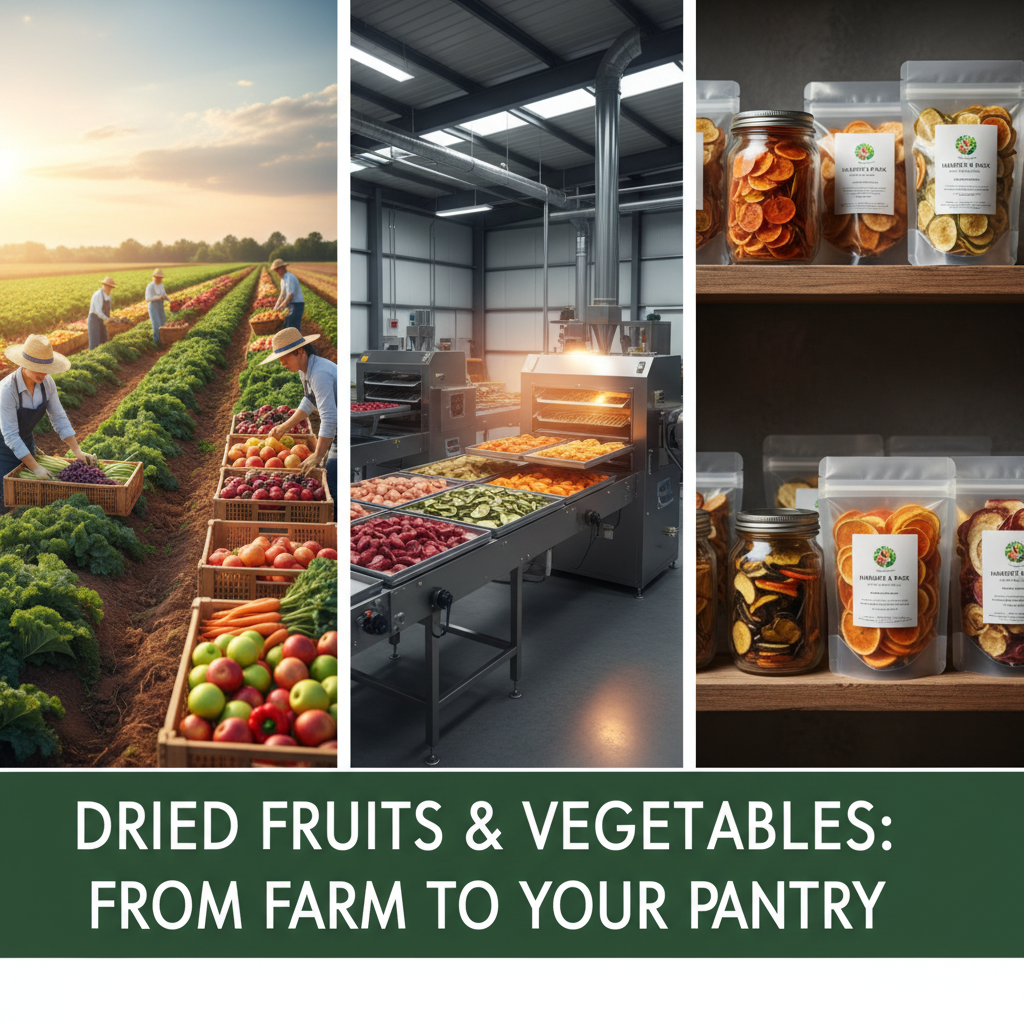
# The Fascinating Journey of Dried Fruits and Vegetables: From Farm to Pack
**Key Takeaways:**
– The process of producing dried fruits and vegetables encompasses a meticulous sequence from harvesting to packaging, ensuring both quality and safety are preserved.
– Proper storage practices are critical for maintaining the nutrition and extending the shelf life of dried products.
– Incorporating dried fruits and vegetables into your meals can provide an array of health benefits, including enhancing digestion and supporting cardiovascular health.
Have you ever thought about the remarkable path that your favorite dried fruits and vegetables travel, transforming from fresh harvests into convenient snacks for your pantry? This journey is not just about drying produce; it’s a rich and detailed process designed to secure flavor, texture, and overall nutritional value. Join us as we explore this captivating journey and share distinctive insights into the innovative techniques that convert fresh produce into the delicious dried snacks you love.
## The Beginning: Harvesting Fresh Produce
**Choosing the Perfect Fruits and Vegetables**
The adventure begins with the meticulous selection of fruits and vegetables, harvested at the peak of ripeness. Recognizing the right time for harvest is essential:
– **Fruits:** Harvested when they are fully ripened to ensure a maximum level of sweetness and flavor complexity.
– **Vegetables:** Often gathered just before full ripeness to maintain firmness and prevent over-ripening during drying.
Farmers prioritize varieties that possess lower moisture levels and higher sugar content for the drying process, as these traits significantly enhance both the drying experience and the quality of the final product.
**Methods of Harvesting**
The way in which produce is gathered can greatly influence the end quality of dried items:
– **Manual Harvesting:** This method allows for careful selection and gentle handling, minimizing damage to fruits and vegetables.
– **Mechanical Harvesting:** While it increases efficiency, this approach can lead to bruising and other damages, potentially compromising the quality of the dried result.
Choosing between these harvesting techniques typically depends on the scale of production and the quality expectations set by farmers.
## Preparing for Drying: Sorting and Cleaning
**Sorting and Assessing Quality**
After harvesting, the next crucial step is sorting the produce to remove:
– **Damaged or Under-Ripe Items:** Ensuring consistency in size and ripeness is vital for effective drying.
– **Foreign Contaminants:** Cleaning out any unwanted materials is essential to guarantee the safety and quality of the final products.
This process guarantees that the visual appeal and integrity of the dried produce are preserved.
**Cleaning Procedures**
A thorough cleaning is imperative to eliminate:
– **Dirt and Contaminants:** Ensuring hygiene is vital to prevent contamination.
– **Pesticides and Residues:** A thorough rinse with purified water, and potentially the use of food-safe sanitizers, is critical for removing harmful substances.
Using clean, high-quality water in this stage is essential, as impurities can impact both safety and flavor.
## Pre-Treatment Methods: Boosting Quality and Safety
**Blanching Techniques**
Blanching involves briefly heating produce to:
– **Preserve Color and Flavor:** This step maintains visual appeal and enhances taste.
– **Inhibit Enzymatic Activity:** The heating process stops enzyme reactions that could degrade quality during drying.
Common blanching techniques include:
– **Steam Blanching:** A quick method that retains nutrients effectively.
– **Hot Water Blanching:** A more traditional approach that requires careful timing to avoid nutrient loss.
Choosing the right blanching technique is based on the specific type of produce and desired quality outcomes.
**Chemical Treatments for Preservation**
To maintain color and quality, various treatments are employed:
– **Ascorbic Acid:** A preferred agent for keeping color vibrant and nutritional value intact.
– **Other Preservatives:** Depending on the type of produce, different agents may be applied to prevent deterioration.
Adhering to safety regulations regarding the use of these agents is crucial for consumer confidence.
## Drying Processes: Moisture Elimination
**Methods of Drying**
A range of techniques for moisture removal includes:
– **Sun Drying:** A traditional yet cost-effective method that risks exposure to contaminants and variable weather conditions.
– **Oven Drying:** This method grants better temperature control, although it may be energy-intensive.
– **Dehydrator Drying:** This provides consistent results and tends to be more energy-efficient.
Each drying method has its pros and cons, often chosen based on the type of produce and the desired quality of the final product.
**Innovations in Freeze-Drying**
Freeze-drying represents a cutting-edge technique that includes:
– **Rapid Freezing of Produce:** This method preserves the structure effectively.
– **Moisture Removal via Sublimation Under Vacuum:** This advanced technique retains nutrients and significantly extends shelf life but usually comes with a higher price tag compared to traditional drying.
## Post-Drying Processes: Ensuring Quality and Safety
**Cooling and Conditioning**
Post-drying, essential steps include:
– **Cooling:** Bringing the produce to room temperature to avoid moisture accumulation.
– **Conditioning:** Equalizing moisture levels to prevent mold growth.
Both processes play a critical role in maintaining product safety and quality.
**Effective Packaging Techniques**
Smart packaging strategies consist of:
– **Material Selection:** Using moisture-proof and airtight containers, such as Mylar bags, vacuum-sealed containers, or glass jars.
– **Sealing Procedures:** Securely sealing packages helps prevent air and moisture intrusion.
Proper packaging is fundamental in extending shelf life while preserving product quality.
## Storage and Distribution: Ensuring Freshness
**Optimal Storage Conditions**
To maintain the freshness of dried produce, consider these optimal storage conditions:
– **Temperature:** Store in a cool environment, away from heat sources.
– **Humidity:** Low humidity levels are essential to prevent spoilage.
When stored correctly, the shelf life of dried fruits and vegetables can be extended up to a year.
**Distribution Strategies**
Efficient distribution is critical and includes:
– **Logistics:** Overseeing the movement of products from processing facilities to retailers.
– **E-commerce:** Utilizing online platforms to connect directly with consumers.
The rise of e-commerce has significantly improved access to dried produce, making these nutritious options more widely available.
## Consumer Insights: Selecting and Utilizing Dried Produce
**Choosing Quality Products Wisely**
When selecting dried produce, keep these tips in mind:
– **Label Scrutiny:** Always check for added sugars or preservatives.
– **Visual Inspection:** High-quality products should display uniform color and texture without irregularities.
Quality dried produce should be free of unnecessary additives and exhibit a natural look.
**Rehydration Techniques and Usage**
To rehydrate your dried produce:
– **Fruits:** Soak in warm water or juice for 5–10 minutes.
– **Vegetables:** Soak in hot water until tender, adjusting based on the specific vegetable type.
Rehydrated fruits and vegetables can enhance a variety of dishes, from salads to baked goods.
## Frequently Asked Questions:
**1. What health benefits do dried fruits and vegetables offer?**
Dried produce retains most of the nutrients found in fresh versions, serving as a concentrated source of vitamins, minerals, and fiber that can bolster overall health.
**2. How can I effectively store dried fruits and vegetables at home?**
Store them in airtight containers in a cool, dark space. Proper sealing away from light and heat can significantly prolong their freshness.
**3. Are there preservatives in dried fruits and vegetables?**
Certain products may have preservatives like sulfur dioxide to prevent browning. Always consult product labels if you have dietary sensitivities.
**4. Can I dry fruits and vegetables at home?**
Absolutely! With appropriate methods and equipment, drying produce at home is entirely feasible. Just remember to follow proper sanitation practices tailored to each type of produce.
**5. How does the nutritional value of dried produce compare to fresh?**
While drying concentrates certain nutrients, it reduces water content. Though some heat-sensitive vitamins may diminish, dried items remain a nutritious choice.
## Conclusion:
The journey of dried fruits and vegetables from farm to packaging embodies the precision and dedication integral to food processing. By understanding each stage—from harvesting to storage—you can develop a richer appreciation for these nutritious snacks. Choosing high-quality products and employing proper storage techniques enables you to enjoy the many benefits of dried produce in your culinary creations.
For a captivating visual guide of the drying process, take a look at this informative video:
[Dried Vegetable & Fruit Processing Line](https://www.youtube.com/watch?v=TXMLfg9fyKE)
Leave a Reply