
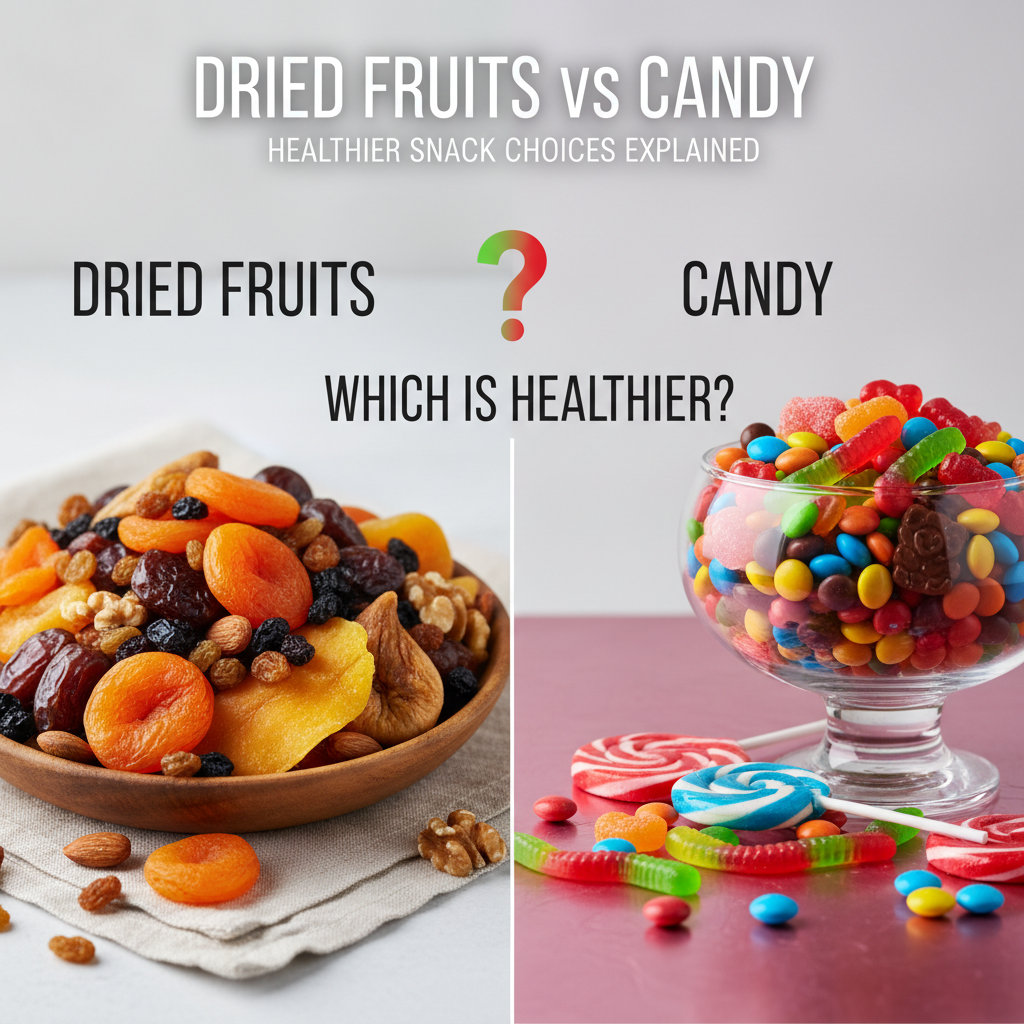
# Dried Fruits vs. Candy: Which Is the Healthier Snack?
When the craving for something sweet hits, it’s tempting to reach for a candy bar or a handful of dried fruits. But which option truly supports your health? In this article, we’ll delve into the nutritional profiles of dried fruits and candies, examining their benefits and potential drawbacks to help you make an informed choice.
## Key Takeaways
– **Nutrient Density**: Dried fruits are rich in essential nutrients like vitamins, minerals, and fiber, whereas candies offer little to no nutritional value beyond calories.
– **Sugar Content**: While both contain sugars, dried fruits have natural sugars accompanied by fiber, which helps regulate blood sugar levels. Candies often contain added sugars, leading to rapid blood sugar spikes.
– **Health Implications**: Dried fruits support digestive health and provide sustained energy, while candies can contribute to weight gain and dental issues when consumed excessively.
## Understanding Dried Fruits and Candies
### What Are Dried Fruits?
**Definition and Process**: Dried fruits are fresh fruits that have had their water content removed, concentrating their natural sugars and nutrients. This process involves dehydrating the fruit, which preserves its structure and nutritional content.
**Common Types**: Examples include raisins (dried grapes), dried apricots, dates, and prunes. These fruits are often enjoyed as snacks or incorporated into various dishes.
### What Are Candies?
**Composition**: Candies are typically made from refined sugars, artificial flavors, colors, and preservatives, offering little to no nutritional value beyond calories. They are designed primarily for taste and shelf stability.
**Varieties**: Includes chocolate bars, gummies, hard candies, and licorice. These products are widely available and often consumed as quick, sweet treats.
## Nutritional Comparison
### Sugar Content and Calories
**Dried Fruits**: Contain natural sugars; for instance, raisins are about 59% sugar. ([healthline.com](https://www.healthline.com/nutrition/dried-fruit-good-or-bad?utm_source=openai)) The drying process concentrates these sugars, making dried fruits calorie-dense. However, the presence of fiber helps slow sugar absorption, preventing rapid blood sugar spikes.
**Candies**: Often have added sugars, leading to higher calorie counts with minimal nutritional benefits. The lack of fiber in candies means that their sugars are absorbed quickly, causing rapid increases in blood sugar levels.
### Fiber and Nutrients
**Dried Fruits**: Rich in dietary fiber, vitamins, and minerals. For example, dried apricots provide vitamin A, potassium, and iron. ([sunmaid.com](https://www.sunmaid.com/healthy-living/benefits-of-dried-fruits/?utm_source=openai)) The fiber content aids digestion and promotes a feeling of fullness, which can assist in weight management.
**Candies**: Generally lack fiber and essential nutrients, offering “empty calories.” Regular consumption can lead to nutritional deficiencies if they replace more nutrient-dense foods in the diet.
## Health Implications
### Impact on Blood Sugar Levels
**Dried Fruits**: The fiber content helps slow sugar absorption, preventing rapid blood sugar spikes. This results in more stable energy levels and reduced risk of insulin resistance.
**Candies**: Lead to quick increases in blood sugar, followed by crashes, which can affect energy levels and mood. Over time, frequent consumption can increase the risk of developing type 2 diabetes.
### Effects on Weight Management
**Dried Fruits**: While calorie-dense, their fiber content promotes satiety, potentially aiding in weight control. The natural sugars provide a quick energy source without the added fats found in many candies.
**Candies**: High in calories with little nutritional value, contributing to weight gain when consumed in excess. The combination of added sugars and fats can lead to increased calorie intake without providing essential nutrients.
## Dental Health Considerations
### Stickiness and Sugar Content
**Dried Fruits**: Their sticky nature can adhere to teeth, increasing the risk of cavities if oral hygiene is not maintained. It’s important to brush and floss regularly to prevent dental issues.
**Candies**: Also sticky and sugary, posing similar dental health risks. Additionally, the acidity in some candies can erode tooth enamel, further compromising dental health.
## Moderation and Smart Choices
### Portion Control
**Dried Fruits**: Due to their concentrated sugar and calorie content, it’s important to consume them in moderation. A small handful can provide a satisfying sweet taste without overconsumption.
**Candies**: Should be enjoyed sparingly to avoid excessive sugar intake. Opting for smaller portions or sharing treats can help manage calorie and sugar consumption.
### Choosing the Healthier Option
**Dried Fruits**: Opt for unsweetened varieties without added sugars or preservatives. Reading labels can help identify products that are closer to their natural state.
**Candies**: Limit consumption and choose options with lower sugar content when possible. Dark chocolate, for example, contains less sugar and offers some health benefits due to its antioxidant properties.
## Frequently Asked Questions (FAQs)
1. **Are dried fruits a good source of vitamins and minerals?**
Yes, dried fruits retain many nutrients found in fresh fruits, including vitamins A and C, potassium, and iron. ([health.harvard.edu](https://www.health.harvard.edu/nutrition/is-eating-dried-fruit-healthy?utm_source=openai))
2. **Can dried fruits help with digestion?**
The fiber in dried fruits aids in digestion and promotes regular bowel movements. ([sunmaid.com](https://www.sunmaid.com/healthy-living/benefits-of-dried-fruits/?utm_source=openai))
3. **Do dried fruits contain added sugars?**
Some dried fruits have added sugars; it’s advisable to check labels and choose unsweetened options. ([healthline.com](https://www.healthline.com/nutrition/dried-fruit-good-or-bad?utm_source=openai))
4. **Is it better to eat dried fruits or fresh fruits?**
Both have health benefits; however, fresh fruits have higher water content and fewer calories, while dried fruits are more calorie-dense. ([health.harvard.edu](https://www.health.harvard.edu/nutrition/is-eating-dried-fruit-healthy?utm_source=openai))
5. **Can consuming too many dried fruits be harmful?**
Overconsumption can lead to excessive calorie and sugar intake, potentially affecting weight and blood sugar levels. ([healthline.com](https://www.healthline.com/nutrition/dried-fruit-good-or-bad?utm_source=openai))
6. **Are candies completely devoid of nutrients?**
Candies provide minimal nutritional value and are primarily sources of empty calories. ([healthyfoods-tjttn.com](https://www.healthyfoods-tjttn.com/news/is-dried-fruit-healthier-than-candy-77851158.html?utm_source=openai))
7. **How can I satisfy my sweet tooth healthily?**
Opt for fresh fruits, unsweetened dried fruits, or small portions of dark chocolate to satisfy cravings. ([sunmaid.com](https://www.sunmaid.com/healthy-living/benefits-of-dried-fruits/?utm_source=openai))
## Conclusion
While both dried fruits and candies are sweet treats, dried fruits offer more nutritional benefits, including fiber, vitamins, and minerals. However, due to their concentrated sugar and calorie content, it’s essential to consume them in moderation. Candies, on the other hand, provide little nutritional value and should be enjoyed sparingly. Making informed choices and practicing moderation can help you enjoy sweet snacks without compromising your health.
## Recent Studies on Dried Fruits and Health:
– [Forget Gummies: Food Science Study Finds Dried Fruit Has the Highest Nutritional Value : College of Natural Sciences : UMass Amherst](https://www.umass.edu/natural-sciences/news/food-science-studies-dried-fruit?utm_source=openai)
– [Nutrient Density, Added Sugar, and Fiber Content of Commercially Available Fruit Snacks in the United States from 2017 to 2022](https://www.mdpi.com/2072-6643/16/2/292?utm_source=openai)
Leave a Reply