
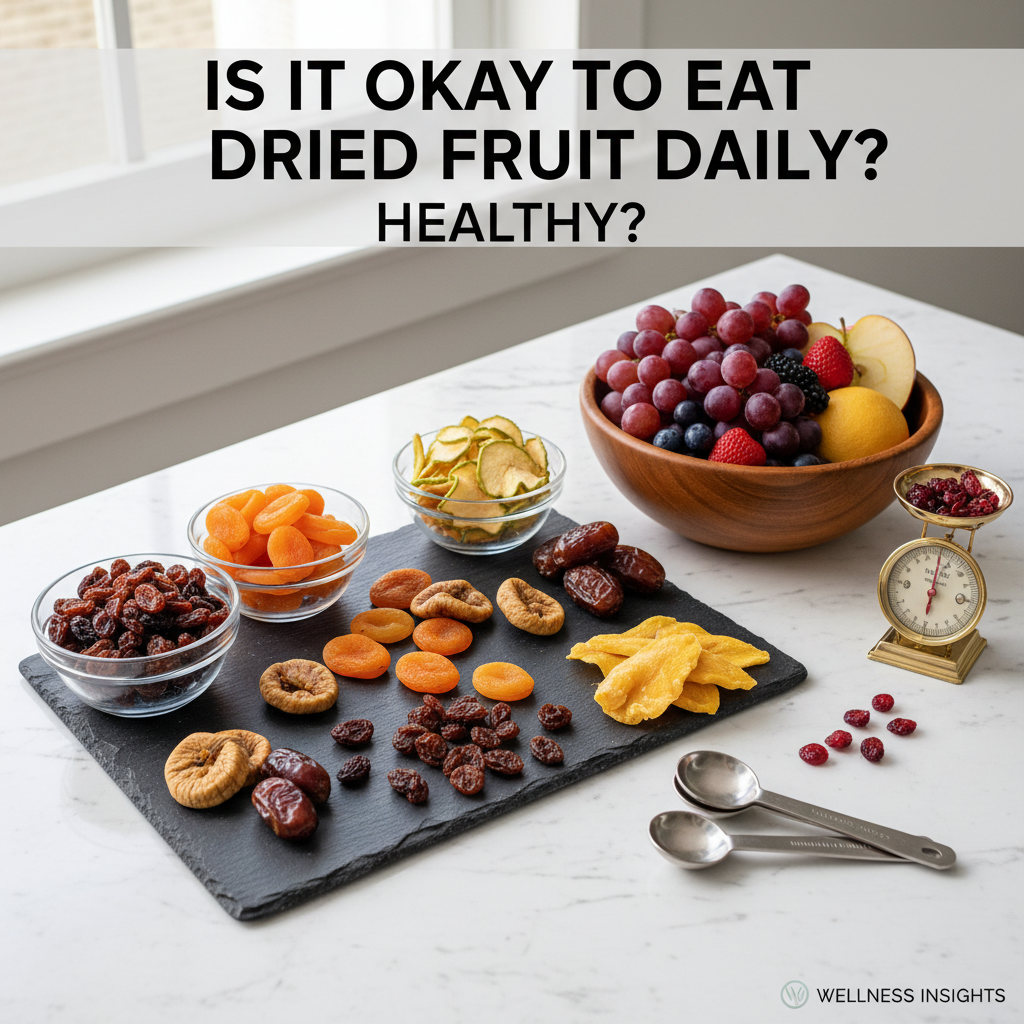
# Is It Okay to Eat Dried Fruit Every Day?
**Introduction**
Dried fruits are a convenient and tasty snack, often hailed for their portability and long shelf life. But with their concentrated sugars and calories, you might wonder: is it okay to eat dried fruit every day? Let’s explore the benefits and potential drawbacks to help you make an informed decision.
## The Nutritional Profile of Dried Fruits
**Concentrated Nutrients**
Dried fruits retain most of the vitamins, minerals, and antioxidants found in their fresh counterparts, offering a nutrient-dense snack. For instance, dried apricots are rich in beta-carotene and vitamin E, both of which are potent antioxidants that support eye health and protect against oxidative stress. ([consumerreports.org](https://www.consumerreports.org/health/nutrition-healthy-eating/is-dried-fruit-good-for-you-a3300239620/?utm_source=openai))
**High Fiber Content**
The drying process concentrates fiber, aiding digestion and promoting satiety. A serving of dried apricots, for example, provides about 3 grams of fiber, which contributes to healthy digestion and helps maintain a feeling of fullness between meals. ([consumerreports.org](https://www.consumerreports.org/health/nutrition-healthy-eating/is-dried-fruit-good-for-you-a3300239620/?utm_source=openai))
## Health Benefits of Daily Consumption
**Heart Health**
Regular intake of dried fruits may help lower blood pressure and reduce the risk of cardiovascular diseases. Studies have shown that consuming dried fruits like raisins can lead to reductions in systolic blood pressure, likely due to their high potassium and antioxidant content. ([todaysdietitian.com](https://www.todaysdietitian.com/dried-fruits-underconsumed-but-oh-so-nutritious/?utm_source=openai))
**Digestive Support**
The fiber in dried fruits supports healthy digestion and regular bowel movements. Prunes, in particular, are well-known for their natural laxative effect, which can help alleviate constipation and promote overall gut health. ([healthline.com](https://www.healthline.com/nutrition/dried-fruit-good-or-bad?utm_source=openai))
**Antioxidant Properties**
Dried fruits are rich in antioxidants, which combat oxidative stress and may lower the risk of chronic diseases. For example, dried cranberries contain proanthocyanidins, compounds that have been linked to reduced risk of urinary tract infections and may also support cardiovascular health. ([todaysdietitian.com](https://www.todaysdietitian.com/dried-fruits-underconsumed-but-oh-so-nutritious/?utm_source=openai))
## Potential Drawbacks of Daily Consumption
**High Sugar and Calorie Density**
Dried fruits are calorie-dense and can contribute to weight gain if consumed in large quantities. For instance, a small 1.5-ounce box of raisins contains about 25 grams of sugar—the same amount found in a much larger volume of fresh grapes. ([time.com](https://time.com/4082532/dried-fruit-prunes-sugar-raisins/?utm_source=openai))
**Dental Concerns**
The sticky nature of dried fruits can adhere to teeth, increasing the risk of cavities and tooth decay. To minimize this risk, it’s advisable to brush and floss after consuming dried fruits and to drink water to help wash away sugars that may stick to teeth. ([kayawell.com](https://www.kayawell.com/Food/5-Reasons-Why-You-Should-Not-Eat-Too-gastrointestinal-bleeding-asthma?utm_source=openai))
**Digestive Issues**
Excessive consumption may lead to gastrointestinal discomfort, including bloating and diarrhea. This is due to the high fiber content, which, when consumed in large amounts without adequate water intake, can overstimulate the intestines. ([lamclinic.com](https://lamclinic.com/blog/the-good-and-the-bad-about-dried-fruit/?utm_source=openai))
## Best Practices for Incorporating Dried Fruits
**Moderation is Key**
Limit portions to prevent excessive calorie and sugar intake. A recommended serving size is about 1 to 2 ounces (approximately 1/4 to 1/2 cup) per day. ([consumerreports.org](https://www.consumerreports.org/health/nutrition-healthy-eating/is-dried-fruit-good-for-you-a3300239620/?utm_source=openai))
**Choose Unsweetened Varieties**
Opt for dried fruits without added sugars to maintain a healthier snack. Many commercial varieties contain added sugars or preservatives like sulfites, which can cause allergic reactions in sensitive individuals. ([consumerreports.org](https://www.consumerreports.org/health/nutrition-healthy-eating/is-dried-fruit-good-for-you-a3300239620/?utm_source=openai))
**Pair with Other Foods**
Combine dried fruits with nuts or yogurt to balance nutrients and enhance satiety. This combination provides a mix of carbohydrates, protein, and healthy fats, which can help stabilize blood sugar levels and keep you feeling full longer.
## Alternatives to Dried Fruits
**Fresh Fruits**
Offer hydration and lower calorie density, making them a good alternative. For example, fresh berries are rich in antioxidants and lower in calories compared to their dried counterparts. ([goodrx.com](https://www.goodrx.com/well-being/diet-nutrition/dried-fruit-good-or-bad-for-you?utm_source=openai))
**Freeze-Dried Fruits**
Retain most nutrients and have a lighter texture without added sugars. Freeze-dried fruits can be a convenient and healthy alternative, offering the benefits of dried fruits without the drawbacks of added sugars and preservatives.
## Conclusion
Incorporating dried fruits into your daily diet can offer several health benefits, provided you consume them in moderation and choose varieties without added sugars. Being mindful of portion sizes and balancing your diet with fresh fruits and other nutrient-rich foods will help you enjoy the advantages of dried fruits without the potential downsides.
## FAQs
**1. Are dried fruits as healthy as fresh fruits?**
Dried fruits retain most of the nutrients found in fresh fruits but are more calorie-dense. Consuming them in moderation can provide health benefits similar to fresh fruits. ([goodrx.com](https://www.goodrx.com/well-being/diet-nutrition/dried-fruit-good-or-bad-for-you?utm_source=openai))
**2. Can dried fruits help with weight loss?**
While dried fruits are nutrient-rich, their high calorie density means they should be consumed in moderation to avoid weight gain. Pairing them with protein or healthy fats can help with satiety. ([goodrx.com](https://www.goodrx.com/well-being/diet-nutrition/dried-fruit-good-or-bad-for-you?utm_source=openai))
**3. How can I prevent tooth decay when eating dried fruits?**
To minimize the risk of tooth decay, practice good oral hygiene by brushing and flossing after consuming dried fruits. Drinking water can also help wash away sugars that may stick to teeth. ([kayawell.com](https://www.kayawell.com/Food/5-Reasons-Why-You-Should-Not-Eat-Too-gastrointestinal-bleeding-asthma?utm_source=openai))
**4. Are there any dried fruits I should avoid?**
Be cautious with dried fruits that contain added sugars or preservatives like sulfites, which can cause allergic reactions in sensitive individuals. ([consumerreports.org](https://www.consumerreports.org/health/nutrition-healthy-eating/is-dried-fruit-good-for-you-a3300239620/?utm_source=openai))
**5. How can I incorporate dried fruits into my diet healthily?**
Use dried fruits as a topping for salads, mix them into yogurt, or combine them with nuts for a balanced snack. Always watch portion sizes to maintain a healthy diet. ([goodrx.com](https://www.goodrx.com/well-being/diet-nutrition/dried-fruit-good-or-bad-for-you?utm_source=openai))
Leave a Reply