
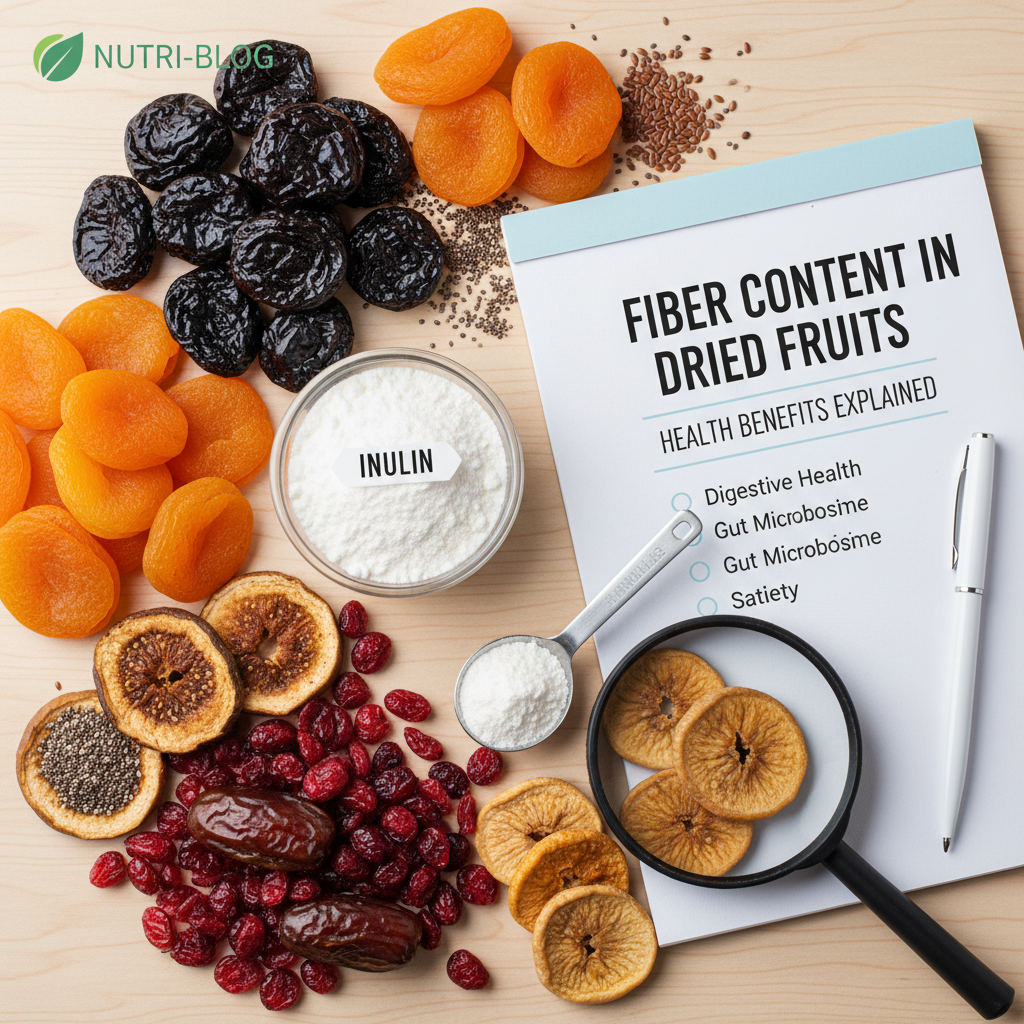
# Exploring the Fiber Content in Dried Fruits: A Comprehensive Guide
Dried fruits are celebrated for their convenience and natural sweetness, making them a popular choice for snacking and adding flavor to various dishes. But how do they measure up as a source of dietary fiber? In this comprehensive guide, we’ll delve into the fiber content of various dried fruits, their health benefits, and how they compare to their fresh counterparts.
## Key Takeaways
– **High Fiber Content**: Dried fruits like figs, prunes, and apricots are rich in dietary fiber, aiding digestion and promoting heart health.
– **Calorie Density**: Due to water removal during drying, dried fruits are calorie-dense; portion control is essential to prevent weight gain.
– **Added Sugars**: Some commercially dried fruits contain added sugars; opting for unsweetened varieties is advisable.
– **Hydration**: Consuming dried fruits with adequate water intake helps prevent digestive discomfort.
## Understanding Dietary Fiber and Its Importance
### What Is Dietary Fiber?
Dietary fiber refers to the indigestible parts of plant foods that pass through the digestive system, providing numerous health benefits. There are two main types of dietary fiber:
– **Soluble Fiber**: Dissolves in water to form a gel-like substance, helping to lower blood cholesterol and glucose levels.
– **Insoluble Fiber**: Does not dissolve in water and aids in moving food through the digestive tract, promoting regular bowel movements.
### Health Benefits of Dietary Fiber
– **Digestive Health**: Fiber promotes regular bowel movements and prevents constipation.
– **Heart Health**: A diet high in fiber can help lower cholesterol levels, reducing the risk of heart disease.
– **Blood Sugar Regulation**: Fiber slows the absorption of sugar, aiding in blood sugar control.
## Fiber Content in Dried Fruits
Dried fruits are a concentrated source of dietary fiber. Here’s a comparison of the fiber content in various dried fruits per 40g serving:
| Dried Fruit | Fiber (g per 40g) |
|————————-|——————-|
| Dried Figs | 3.9 |
| Prunes (Dried Plums) | 2.9 |
| Dried Apricots | 2.9 |
| Dates (Medjool) | 2.7 |
| Raisins | 1.5 |
| Dried Goji Berries | 1.5 |
| Dried Cranberries (Sweetened) | 1.2 |
| Dried Mango | 1.1 |
| Dried Blueberries (Sweetened) | 1.0 |
| Dried Cherries (Sweetened) | 0.8 |
*Data sourced from Flavor365* ([flavor365.com](https://flavor365.com/which-dried-fruits-have-the-most-fiber-the-definitive-guide/?utm_source=openai))
## Comparing Dried Fruits to Fresh Fruits
### Fiber Content Comparison
Dried fruits generally have more fiber per serving than fresh fruits due to the removal of water during drying. For example, a 40g serving of dried figs provides 3.9g of fiber, whereas the same weight of fresh figs offers significantly less.
### Nutrient Retention and Loss
While most nutrients are retained during the drying process, some, like vitamin C, may decrease. However, dried fruits still provide a good source of vitamins, minerals, and antioxidants.
## Health Benefits of Consuming Dried Fruits
### Digestive Health
The fiber in dried fruits aids digestion and prevents constipation. For instance, prunes are well-known for their natural laxative effect, helping to regulate bowel movements. ([healthline.com](https://www.healthline.com/nutrition/dried-fruit-good-or-bad?utm_source=openai))
### Heart Health
Regular consumption of dried fruits may lower blood pressure and cholesterol levels. The soluble fiber in dried fruits helps reduce LDL cholesterol, contributing to overall heart health. ([healthline.com](https://www.healthline.com/nutrition/dried-fruit-good-or-bad?utm_source=openai))
### Weight Management
Fiber promotes satiety, helping control appetite and reduce calorie intake. Including dried fruits in your diet can aid in weight management by keeping you feeling full longer. ([healthline.com](https://www.healthline.com/nutrition/dried-fruit-good-or-bad?utm_source=openai))
## Potential Drawbacks and Considerations
### Calorie and Sugar Content
Dried fruits are calorie-dense and can be high in natural sugars. For example, a 40g serving of dried apricots contains approximately 96 calories and 21g of sugar. ([sunmaid.com](https://www.sunmaid.com/wp-content/uploads/2019/02/US-Edition_Ch1.pdf?utm_source=openai))
### Portion Control
It’s easy to overconsume dried fruits; mindful portion sizes are essential. A standard serving is about 40g, roughly equivalent to a small handful.
### Added Sugars and Preservatives
Some commercially dried fruits contain added sugars and preservatives. Opt for unsweetened varieties to avoid unnecessary additives. ([consumerreports.org](https://www.consumerreports.org/health/nutrition-healthy-eating/is-dried-fruit-good-for-you-a3300239620/?utm_source=openai))
## Incorporating Dried Fruits into Your Diet
### Healthy Snack Options
– **Pairing with Nuts**: Combine dried fruits with nuts for a balanced snack rich in fiber and healthy fats.
– **Adding to Yogurt**: Mix dried fruits into yogurt for added flavor and nutrition.
### Culinary Uses
– **Salads**: Add dried fruits to salads for a sweet contrast.
– **Cereals**: Mix into cereals or oatmeal for extra fiber.
– **Baked Goods**: Incorporate into muffins, breads, or cookies.
### Choosing Quality Products
– **Unsweetened Varieties**: Select dried fruits without added sugars or artificial preservatives.
– **Organic Options**: Consider organic dried fruits to avoid pesticides and additives.
## FAQ Section
1. **Are dried fruits as healthy as fresh fruits?**
Dried fruits retain most nutrients but may lose some, like vitamin C, during drying. They are a good source of fiber and antioxidants. ([consumerreports.org](https://www.consumerreports.org/health/nutrition-healthy-eating/is-dried-fruit-good-for-you-a3300239620/?utm_source=openai))
2. **Can dried fruits help with weight loss?**
The fiber in dried fruits can promote satiety, aiding in weight management. However, portion control is important due to their calorie density. ([healthline.com](https://www.healthline.com/nutrition/dried-fruit-good-or-bad?utm_source=openai))
3. **Do dried fruits contain added sugars?**
Some dried fruits have added sugars; it’s best to choose unsweetened varieties. ([consumerreports.org](https://www.consumerreports.org/health/nutrition-healthy-eating/is-dried-fruit-good-for-you-a3300239620/?utm_source=openai))
4. **How much dried fruit should I eat daily?**
Moderation is key; a small handful (about 1/4 cup or 40g) is a reasonable daily portion.
5. **Are there any health risks associated with dried fruits?**
Overconsumption can lead to excessive calorie intake; choose varieties without added sugars. ([consumerreports.org](https://www.consumerreports.org/health/nutrition-healthy-eating/is-dried-fruit-good-for-you-a3300239620/?utm_source=openai))
## Conclusion
Dried fruits are a concentrated source of dietary fiber and offer various health benefits, including improved digestion and heart health. However, due to their calorie density and potential added sugars, it’s important to consume them in moderation and choose unsweetened options. Incorporating dried fruits into a balanced diet can be a tasty and nutritious way to meet your fiber needs.
## Is Dried Fruit Just a Giant Sugar Bomb?:
– [Is Dried Fruit Just a Giant Sugar Bomb?](https://time.com/4082532/dried-fruit-prunes-sugar-raisins/?utm_source=openai), Published on Thursday, October 22
Leave a Reply