
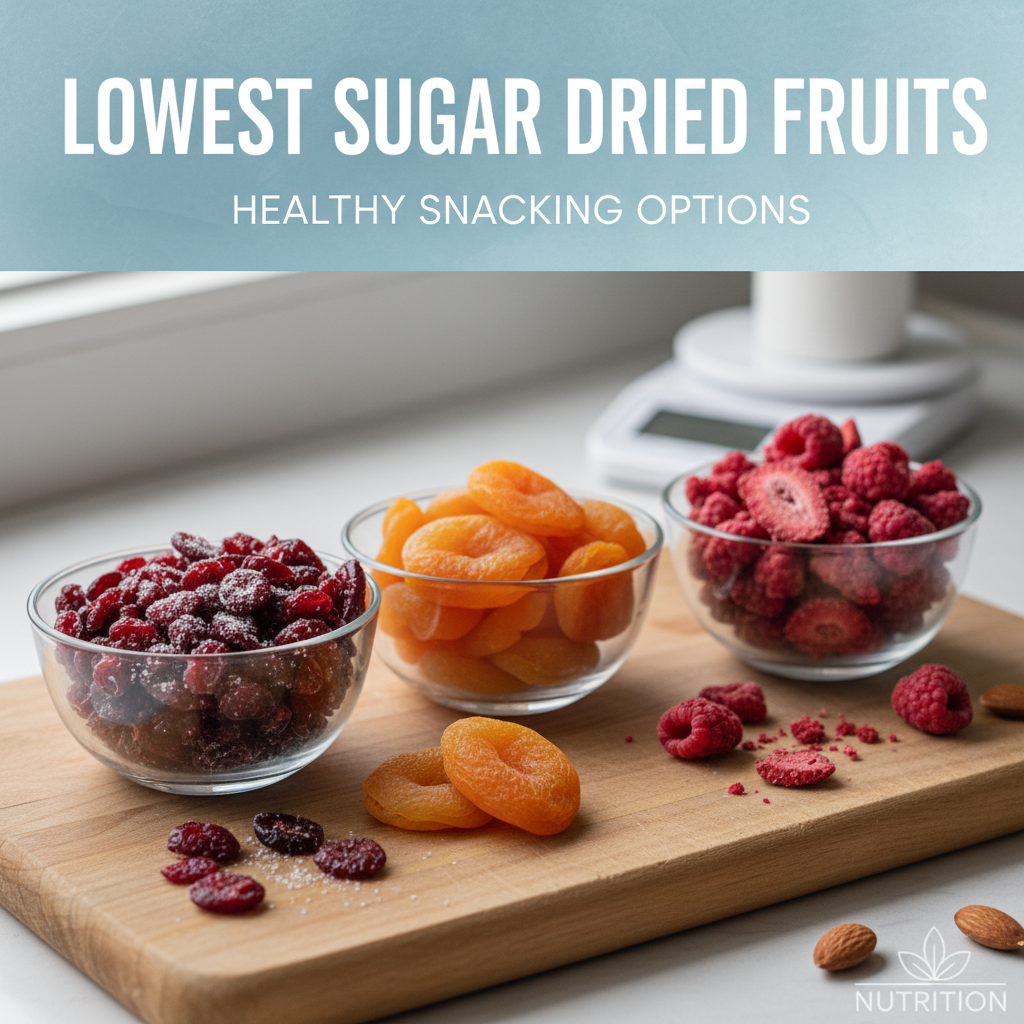
# Which Dried Fruit Contains the Least Sugar?
**Key Insights**
– Unsweetened dried apricots, prunes, cranberries, figs, and guavas are generally among the lowest in natural sugars.
– Opting for unsweetened versions helps you avoid unnecessary added sugars.
– Be mindful of portion sizes, as dried fruits are calorie-dense.
– Combining dried fruits with sources of healthy fats or proteins can aid in stabilizing blood sugar levels.
**Introduction**
Dried fruits serve as a convenient and tasty alternative for those looking to satisfy their sweet tooth. However, being aware of their sugar content is essential, especially if you are keeping tabs on your sugar intake. This guide will explore which dried fruits naturally contain less sugar, equipping you to make healthier snacking decisions.
## Understanding Sugar Content in Dried Fruits
**Distinguishing Natural and Added Sugars**
Dried fruits naturally contain sugars, primarily fructose and glucose. However, many commercially available dried fruits come with added sugars to enhance their flavor and extend shelf life. It is crucial to differentiate between these natural and added sugars to make healthier dietary choices.
**How Drying Affects Sugar Concentrations**
The drying process removes water from the fruit, which results in a higher concentration of sugars compared to their fresh counterparts. For instance, just one cup of raisins can contain more sugar than a cup of fresh grapes, highlighting the difference in their sugar content.
## Low-Sugar Dried Fruit Options
**1. Unsweetened Dried Apricots**
– **Sugar Content**: Approximately 9 grams per 40-gram serving.
– **Nutritional Value**: Packed with fiber, potassium, and vitamin A, they make a heart-healthy snack.
**2. Prunes (Dried Plums)**
– **Sugar Content**: About 11 grams per 40-gram serving.
– **Nutritional Value**: Known for their high fiber and vitamin K, prunes are great for digestive health and may contribute to bone strength.
**3. Unsweetened Dried Cranberries**
– **Sugar Content**: Typically 5–7 grams per 40-gram serving.
– **Nutritional Value**: Rich in antioxidants, these dried fruits help combat oxidative stress and support urinary tract health.
**4. Dried Figs**
– **Sugar Content**: Ranges from 12–14 grams per 40-gram serving.
– **Nutritional Value**: Figs are abundant in calcium and iron, promoting bone health and providing a natural energy boost.
**5. Dried Guavas**
– **Sugar Content**: Roughly 7 grams per 40-gram serving.
– **Nutritional Value**: These fruits are high in vitamin C and antioxidants, bolstering your immune system and supporting skin wellness.
## Higher Sugar Dried Fruit Options
**1. Raisins**
– **Sugar Content**: About 18 grams per 40-gram serving.
– **Considerations**: While they contain valuable nutrients, their high sugar content may not be ideal for those monitoring sugar closely.
**2. Dates**
– **Sugar Content**: Close to 27 grams per 40-gram serving.
– **Considerations**: Dates are high in energy, which can lead to quick spikes in blood sugar; moderation is essential.
## Tips for Choosing Low-Sugar Dried Fruits
**1. Opt for Unsweetened Choices**
Always examine labels to ensure there are no added sugars or preservatives. Ideally, the ingredient list should consist of only the fruit itself.
**2. Be Mindful of Portions**
Due to their calorie density, it’s important to stick to appropriate serving sizes to manage sugar and caloric intake effectively.
**3. Pair with Healthy Fats or Protein**
Combining dried fruits with nuts, seeds, or yogurt can enhance satiety and help in regulating blood sugar levels.
**4. Choose Organic Products**
Going for organic dried fruits might lower your chances of exposure to added sugars and preservatives, making them a healthier snack choice.
## Common Questions
**1. Are dried fruits with added sugars unhealthy?**
Dried fruits that are sweetened can lead to higher calorie and sugar consumption, potentially contributing to weight gain and other health issues. Therefore, it is better to select unsweetened varieties.
**2. Can individuals with diabetes enjoy dried fruits?**
Yes, but caution is advised. It’s best to go for low-sugar, unsweetened options and remain vigilant about monitoring blood sugar levels.
**3. How can I identify if dried fruit contains added sugar?**
Always check the ingredients for terms like “syrup,” “cane sugar,” or “glucose.” Unsweetened dried fruits should list only the fruit in their ingredients.
**4. Are there dried fruits without any sugar?**
While no dried fruits are free of natural sugars, it’s important to focus on those with the lowest sugar content and no added sugars.
**5. How does the sugar content of dried fruits compare to that of fresh fruits?**
Dried fruits have a higher sugar concentration than fresh fruits because the drying process removes water. What’s more, a small serving of dried fruit can equal or exceed the sugar in a larger serving of fresh fruit.
**6. Is it possible to reduce the sugar content of dried fruits at home?**
While natural sugars cannot be removed, you can dehydrate fruits without adding sugar to create a healthier snack option.
**7. Are there zero-sugar dried fruits?**
No, all dried fruits naturally contain sugars. The key is to choose varieties that offer the least sugar content while ensuring there are no added sugars.
## Conclusion
Selecting unsweetened dried fruits such as apricots, prunes, cranberries, figs, and guavas can provide a delightful and healthier snacking option. Always read labels carefully, keep an eye on portion sizes, and think about pairing dried fruits with healthy fats or proteins to help maintain steady blood sugar levels.
Leave a Reply