
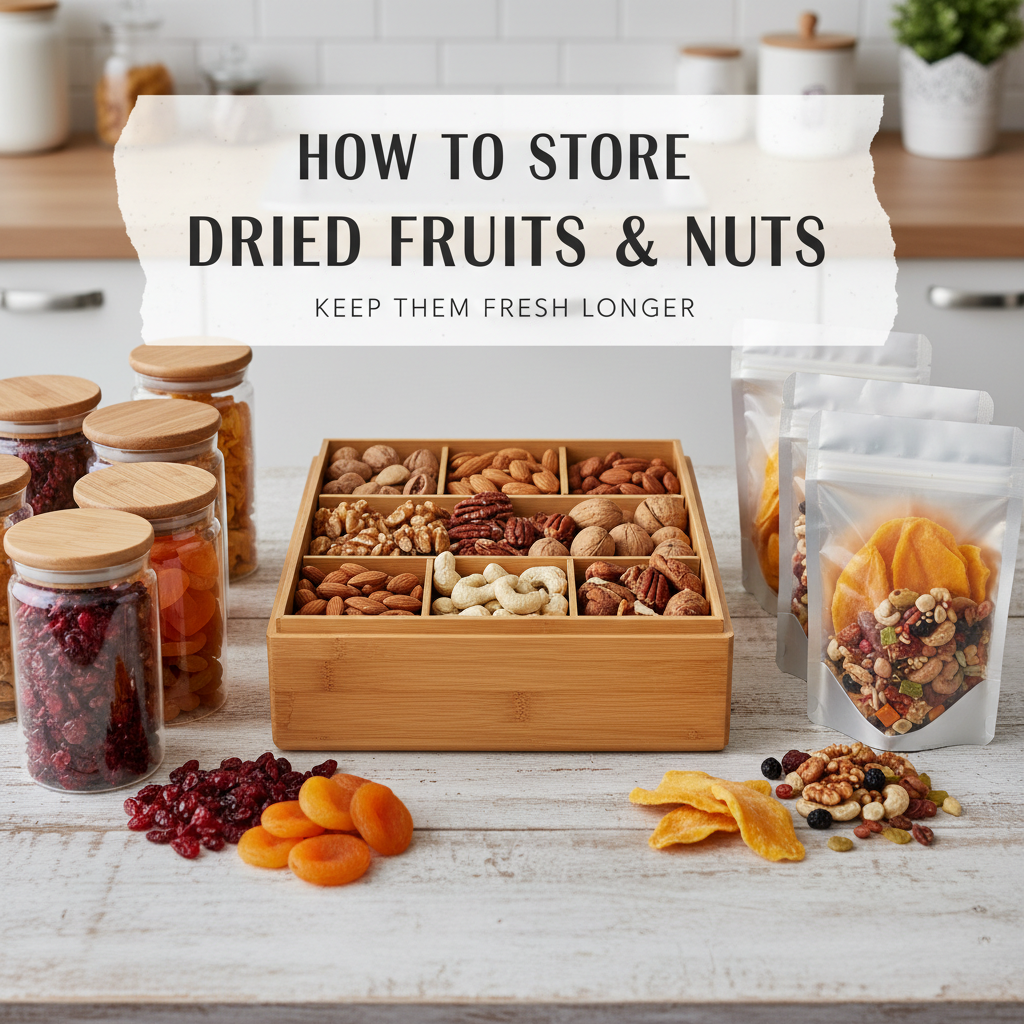
# Storing Dried Fruits and Nuts: Techniques for Optimal Freshness
**Key Insights**
– **Opt for Airtight Storage Solutions**: Prefer glass jars with reliable seals or vacuum-sealed bags, as they effectively minimize air exposure, which can lead to spoilage.
– **Temperature Matters**: Aim to store your dried fruits and nuts in a cool, dim environment—ideally under 68°F (20°C)—to shield them from light and humidity.
– **Refrigeration or Freezing Benefits**: If you’re in a warmer climate, refrigerating or freezing can significantly prolong the shelf life of your nuts and dried fruits.
– **Store Varieties Independently**: To maintain their unique flavors, keep different types of dried fruits and nuts separate from one another.
– **Regular Quality Checks**: Make it a habit to inspect your stored goods for any signs of spoilage and deal with any items that have passed their prime promptly.
**Introduction**
Dried fruits and nuts are not only flavorful but also packed with essential vitamins and healthy fats, making them a perfect addition to your diet for snacking or cooking. However, failing to store them correctly can lead to degradation of flavor and nutrients. This guide will discuss effective and personalized strategies for preserving the freshness of your dried fruits and nuts, ensuring they remain delicious and nutritious over time.
## 1. The Importance of Proper Storage
**Why Proper Storage is Critical**
– **Nutrient Preservation**: Proper storage techniques help maintain the vital vitamins and healthy fats in dried fruits and nuts, ensuring you reap their nutritional benefits.
– **Avoiding Spoilage**: Adopting the right storage methods significantly reduces the risk of mold and rancidity caused by exposure to air, moisture, and excessive heat.
– **Cost Efficiency**: By prolonging the lifespan of your dried fruits and nuts, you can minimize waste and maximize your investment.
## 2. Ideal Storage Conditions
**Temperature Guidelines**
– **Cool Environment**: Keep your dried fruits and nuts in temperatures lower than 68°F (20°C) whenever possible to maintain their freshness.
– **Chilling for Longevity**: For those residing in hotter areas, the refrigerator is an excellent option for keeping walnuts, almonds, and cashews, extending their shelf life up to six months.
**Humidity Control**
– **Dry Storage is Essential**: A dry environment is pivotal; too much humidity can cause spoilage and ruin your favorite snacks.
**Light Protection**
– **Keep it Dark**: Light exposure can degrade the quality of your dried goods. Use opaque containers or store them in dark cabinets for better protection.
## 3. Choosing the Right Storage Method
**Airtight Options**
– **Glass Containers**: Glass jars are exceptional for keeping air at bay and preserving the quality of your snacks.
– **Vacuum-Sealed Bags**: Try vacuum-sealing your items to eliminate the presence of air, further enhancing longevity.
**Materials to Steer Clear Of**
– **Plastic Bags**: These aren’t suitable for long-term storage because they allow air and moisture to seep in.
– **Paper or Cloth Bags**: Their porous nature makes them ineffective, leading to unavoidable spoilage.
## 4. Best Practices for Storing Dried Fruits and Nuts
**Separating Varieties**
– **Preserving Flavor**: Store each type of dried fruit and nut individually to ensure that their flavors don’t interfere with one another.
**Preventing Odor Absorption**
– **Keep Strong Smells at Bay**: Position your nuts and dried fruits away from pungent foods such as onions or garlic to prevent them from taking on unwanted flavors.
**Regular Monitoring**
– **Routine Inspections**: Cultivate the habit of checking for spoilage signs such as mold or unusual odors, and discard anything that isn’t up to par.
## 5. Advanced Storage Techniques
**Freezing for Prolonged Freshness**
– **Long-Term Storage**: For high-fat nuts like walnuts, freezing can maintain freshness for up to one year.
– **How to Thaw**: Once ready to use, allow your frozen nuts to thaw at room temperature or in the refrigerator for the best texture and flavor.
**Innovative Refrigeration Tips**
– **Short to Medium-Term Storage**: Using the refrigerator not only extends the viability of nuts and dried fruits but is particularly useful in humid climates.
## 6. Typical Shelf Life for Dried Fruits and Nuts
**Dried Fruits**
– **Raisins and Dates**: Correctly stored, these sweet treats can last as long as a year.
– **Figs and Apricots**: With cooler storage conditions, they can retain their freshness for an extended period.
**Nuts**
– **Almonds and Cashews**: Keeping them in a cool cupboard allows them to remain fresh for approximately three months, while refrigeration can extend this lifespan.
– **Walnuts**: These are best stored in the fridge or freezer to prevent rapid spoilage.
## 7. Common Storage Mistakes to Avoid
**Handling with Wet Utensils**
– **Vigilance Against Moisture**: Always use dry tools when dealing with dried fruit and nuts to keep moisture at bay.
**Overstocking Issues**
– **Stock Rotation**: Make a point to consume older stock first, ensuring freshness and reducing waste.
**Ignoring Environmental Factors**
– **Be Mindful of Humidity and Temperature**: Maintain optimal storage conditions consistently for the best results.
## FAQ
**1. Should dried fruits and nuts be stored together?**
It’s advisable to store them separately to prevent flavor mixing, enabling each item to retain its unique essence.
**2. How can I tell if my nuts have gone bad?**
Rancid nuts typically emit a sour odor or unpleasant flavor. If you detect these signs, it’s best to discard them.
**3. Do all nuts require refrigeration?**
While not all nuts necessitate refrigeration, chilling them can effectively lengthen their shelf life, especially in warmer climates.
**4. What is the room temperature lifespan for dried fruits?**
With the right storage practices, dried fruits can remain stable for several months at room temperature, though refrigeration can significantly enhance their durability.
**5. Is freezing dried fruits safe?**
Definitely! Freezing is an effective method for extending the shelf life of dried fruits—just ensure they’re stored in airtight containers to avoid freezer burn.
**6. Should dried fruits be washed before storage?**
It’s generally advisable to keep dried fruits unwashed to avoid adding moisture, which can lead to spoilage.
**7. How do I prevent dried fruits from clumping together?**
Utilizing airtight containers and maintaining a cool, dry storage area can prevent clumping. Refrigerating them may also assist in keeping their texture.
## Conclusion
Mastering the art of storing dried fruits and nuts is essential for retaining their delightful flavors, textures, and nutritional advantages. By following the personalized strategies in this guide—like opting for airtight containers, keeping a cool and dark environment, and conducting regular spoilage checks—you can savor your favorite snacks for extended periods. With these fresh insights, you can truly appreciate the diverse flavors and health benefits that dried fruits and nuts can offer.
For a visual companion on storing dried fruits and nuts, check out this informative video:
[How to Store Dried Fruits (Nuts) for Long Time / Easy Storage Tips](https://www.youtube.com/watch?v=KNX_0nra4BU)
Leave a Reply